For centuries, Christians have prayed one short prayer: "Come, Lord Jesus," or in the early church's word, Maranatha. But there is a moment in the Bible when that prayer changes. We stop saying "The King is coming" and start saying "Look, the King has arrived."
That moment is found in Revelation 19 and 20. These chapters hold heaven's loudest worship, the return of Jesus on a white horse, the shortest battle in history and the final judgment.
"The King Returns" is week ten of our series The King Is Coming, a journey through the book of Revelation at illuminate church.
If you only have a minute:
- Hallelujah is the theme. Heaven answers the fall of Babylon with loud worship.
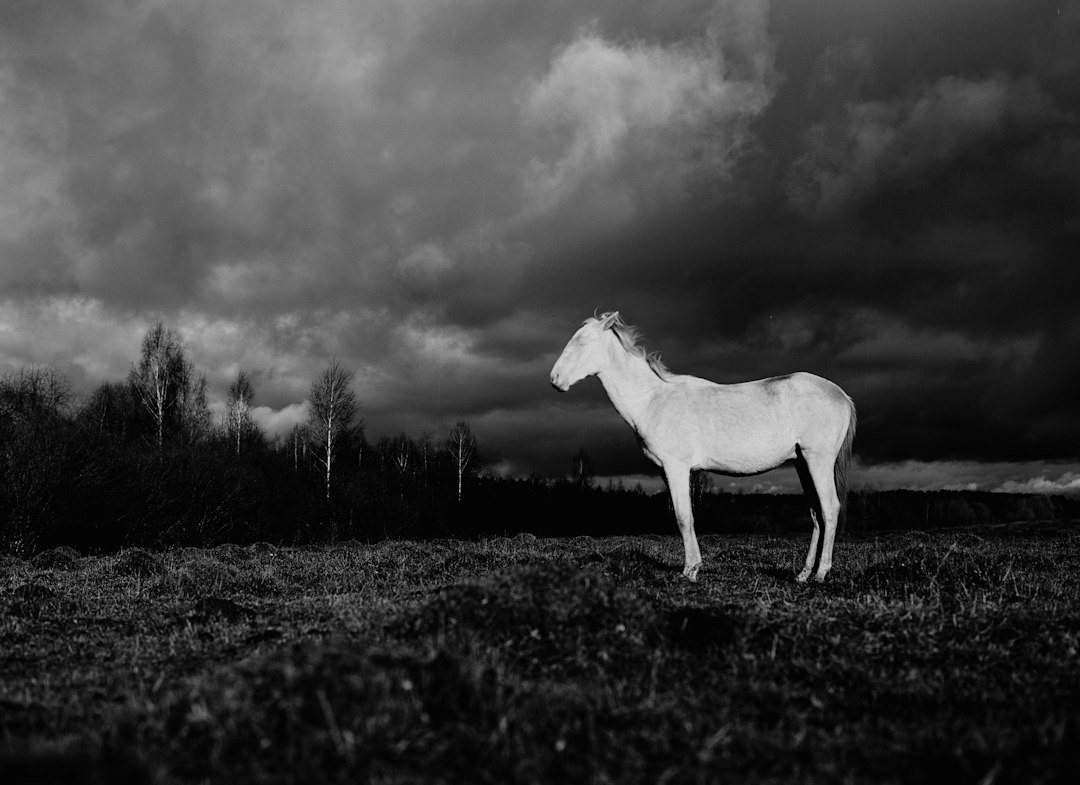
- Jesus returns in glory. He came on a donkey. He returns on a white horse.
- The battle is never a battle. Jesus wins with one weapon: His word.
- Everyone stands before one throne. What did you decide about Jesus?
Revelation 19 and 20: Where Two Stories Collide
Revelation is not mainly a book about the end times. It is about one person: Jesus, the returning King, and the whole book is written to lift Him up.
Revelation is also a tale of two cities. Babylon stands for the world's temporary values, rooted in evil. The New Jerusalem stands for heaven's eternal values, rooted in God's goodness. Chapters 17 and 18 picture Babylon as a prostitute and call us to come out of her. Chapters 21 and 22 picture the bride, the people of God. Here, the two meet one final time.
Hallelujah: Heaven's Loudest Worship
Chapter 19 opens right after Babylon falls, and heaven's first word is Hallelujah, "Praise the Lord." It appears in verses 1, 3, 4 and 6. This passage is also part of the inspiration for the famous "Hallelujah" chorus in Handel's Messiah.
"Then I heard what sounded like a great multitude, like the roar of rushing waters and like loud peals of thunder, shouting: 'Hallelujah! For our Lord God Almighty reigns. Let us rejoice and be glad and give him glory! For the wedding of the Lamb has come, and his bride has made herself ready.'" (Revelation 19:6-7)
The "Lamb" is Jesus, and His "bride" is His people, made ready through His death and resurrection. This is also the last time we see the twenty-four elders and the four living creatures who surround God's throne. Their final act? They fall down and worship (Revelation 19:4).
After so much bad news, the good news pours out like a fountain. God has judged Babylon, prepared the bride, and turned our attention to Jesus' second coming, Satan's final judgment and a new heaven and earth. Even the angel speaking to John says it plainly: "Worship God!" (Revelation 19:10).
As author and pastor John Piper puts it, "Though we may live in Babylon, we will not be captive to Babylonian ways."
What this means for you
Most of us don't lack reasons to say Hallelujah. Sometimes we just struggle to look past the bad news to the final victory. Sunday worship is not a warm-up. It is a declaration that we belong to God and not to Babylon. So raise your hallelujah.
The King Has Arrived: The Rider on the White Horse
Revelation describes seven judgments in a row, through the seals, trumpets and bowls. In contrast, this message traces the major events in the life of Jesus that all build to Revelation 19:
- His incarnation: the Word became flesh (John 1:14).
- His baptism: anointed by the Spirit and declared the Son by His Father (Matthew 3:13-17).
- His crucifixion: bearing the full penalty for sin, once and for all.
- His resurrection: proof that God accepted the sacrifice, and victory over sin, death, hell and Satan.
- His ascension: back to heaven, where He always lives to intercede for us (Hebrews 7:25) and reigns as Lord and King.
- His second coming: when He establishes His reign over everything as King of kings and Lord of lords.
And here it is, the moment the whole series has been building toward:
"I saw heaven standing open and there before me was a white horse, whose rider is called Faithful and True. With justice he judges and wages war. His eyes are like blazing fire... his name is the Word of God... On his robe and on his thigh he has this name written: KING OF KINGS AND LORD OF LORDS." (Revelation 19:11-16)
His First Coming and His Second Coming
- He rode a donkey. He will ride a white horse.
- He came as the Suffering Servant. He will come as King and Lord.
- He came in humility and meekness. He will come in majesty and power.
- He came to suffer the wrath of God for sinners. He will come to establish the Kingdom of God for His people.
- He was rejected by many as the Messiah. He will be recognized by all as Lord.
- He came to seek and save the lost. He will come to judge and rule as King.
- He came as God incognito. He will come as God in all His splendor.
He first appeared in grace. Now He returns in glory. He doesn't come to do a new work, but to complete the finished work of His life, death and resurrection. "Your kingdom come, your will be done" is finally fulfilled.
A Battle That Was Never a Battle
Next, the battle lines are drawn: Jesus and the armies of heaven on one side, and "the beast and the kings of the earth and their armies" on the other (Revelation 19:19). The beast is the evil world ruler Revelation has been describing, and the false prophet leads people to worship him.
Before anything starts, an angel calls the birds to "the great supper of God" (Revelation 19:17-18). It's like showing up to a fight with a coffin already engraved with your opponent's name.
Then it is over. Jesus doesn't strain, and His army doesn't even fight. The only weapon is the sword from His mouth, the word of God, because it is the only weapon needed. The beast and the false prophet are captured and thrown into "the fiery lake of burning sulfur" (Revelation 19:20).
History is bookended by a single voice. What began as a whisper, "Let there be light," ends as a shout of victory. The universe was spoken into existence, and evil will be spoken out of it. The Word of God gets the final say.
The Great White Throne Judgment
Chapter 20 completes the defeat of evil. "And the devil, who deceived them, was thrown into the lake of burning sulfur, where the beast and the false prophet had been thrown" (Revelation 20:10). These three, an "unholy trinity," do not stop existing. They are tormented "day and night for ever and ever."
Death and Hades, the holding place of the dead until judgment, are thrown in too. This is "the second death" (Revelation 20:14). The first death is physical. The second is spiritual: separation forever from the One who gives life.
"Then I saw a great white throne and him who was seated on it... And I saw the dead, great and small, standing before the throne, and books were opened. Another book was opened, which is the book of life... Anyone whose name was not found written in the book of life was thrown into the lake of fire." (Revelation 20:11-15)
At this throne, everyone is judged the same way, and the question is the same for all: what did you decide about Jesus? The "book of life" holds the names of those who belong to Him. In this message, the image of a lake may be figurative, but the reality of eternal separation is not.
What the Bible Says About Hell
- Hell is real, and it is separation from God.
- Hell is eternal, and it is described as fire.
- Hell is a prepared place for the devil and his angels.
- Hell is inescapable once you are there.
- Hell is avoidable if you repent and believe in Jesus Christ.
John Chrysostom, a fourth-century bishop of Constantinople, put it simply: "If we always think of hell, we shall not soon fall into it." The point is not fear, but reverence. Now you know the truth. Respond wisely.
What this means for you
These chapters don't leave anyone neutral. Everyone will answer the same question about Jesus. If you have never settled it, today is the day. If you have, let it lead you to worship and to care about the people around you who haven't yet.
The Good News for the Bride
The bad news comes first, but it is not the end of the story. What waits for those whose names are in the book of life? That's next week, the final message in the series.
For today, hold on to this: if you belong to Jesus, you are the bride of the Lamb, saved through His blood. The Word who began this story and will end it became flesh so we could be forgiven.
"God presented Christ as a sacrifice of atonement, through the shedding of his blood, to be received by faith... he did it to demonstrate his righteousness at the present time, so as to be just and the one who justifies those who have faith in Jesus." (Romans 3:25-26)
This week, renew your love for Jesus as His bride. Read the full passages in Revelation 19 and Revelation 20 (NIV). To see where this story started, read Worthy Is the Lamb.
Ready to settle the question of who Jesus is to you? Take your next step with Jesus. Need someone to pray with you? Reach out for prayer and care. And we'd love to worship with you, so plan your visit this Sunday.
Frequently Asked Questions About Revelation 19 and 20
What happens in Revelation 19 and 20?
Heaven celebrates the fall of Babylon and announces the wedding of the Lamb. Jesus returns on a white horse as King of kings and defeats the beast and the false prophet with the sword of His mouth. The devil is thrown into the lake of burning sulfur, and everyone stands before the great white throne.
Who is the rider on the white horse in Revelation 19?
The rider is called Faithful and True, and "his name is the Word of God" (Revelation 19:13). His robe carries the name "King of Kings and Lord of Lords" (Revelation 19:16). In this message, He is Jesus at His second coming.
What is the book of life?
At the great white throne, "another book was opened, which is the book of life" (Revelation 20:12). Anyone whose name is not written in it is thrown into the lake of fire. Those who repent and believe in Jesus belong to Him.